AFSCA Cleaning Kit
Kitchen and dining-room cleaning plans, with zones, products and daily tick-boxes.
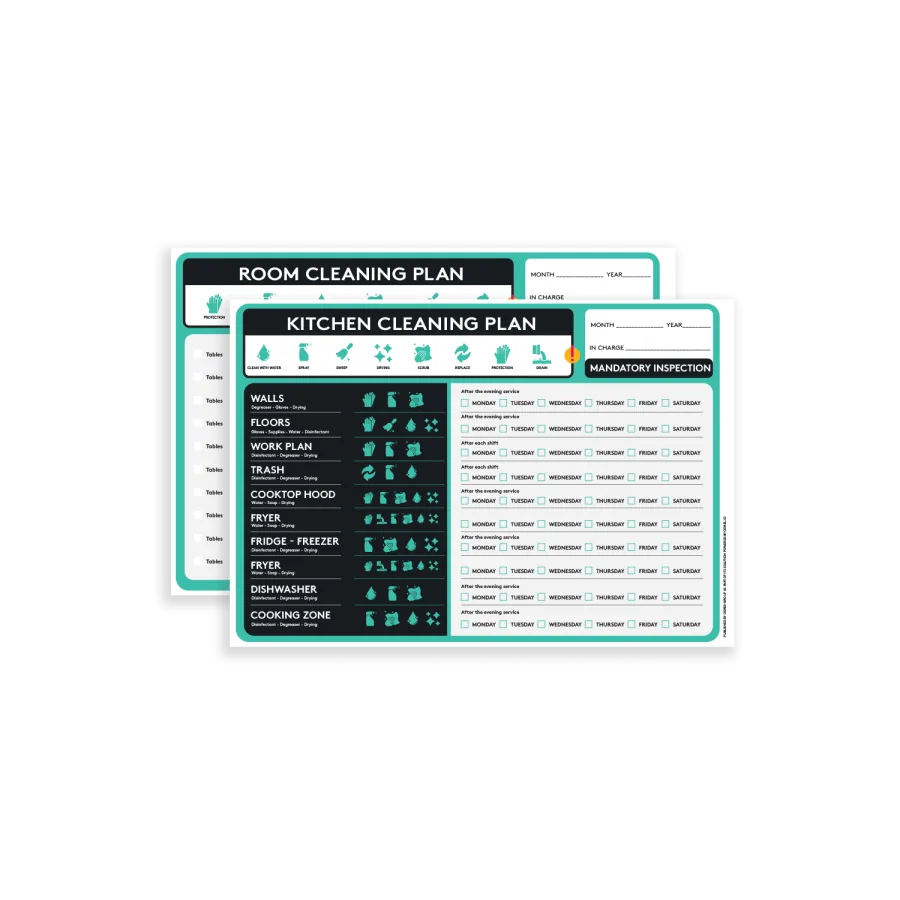
What's in the kit
- Cleaning plan — kitchen
- Cleaning plan — dining room
Kitchen cleaning plan: what is it?
A cleaning plan says who cleans what, with which product, how and how often. Without one, everyone cleans « as usual », and the same corners get forgotten. The hygiene of premises and equipment is part of what the food-safety inspector looks at: a written, ticked plan shows that cleaning is organised, not improvised. The kit contains two plans: one for the kitchen, one for the dining room.
What should a cleaning plan include?
For each line: the area or equipment (worktop, slicer, extractor hood, cold room, floor…), the product and its dosage, the method, the frequency (after each service, daily, weekly), the person responsible and a box to initial. The more precise, the fewer questions.
Cleaning or disinfecting: what is the difference?
Cleaning removes visible dirt: grease, leftovers, dust. Disinfecting reduces germs on a surface that is already clean. The order matters: clean first, disinfect next, then rinse if the product label asks for it. Food-contact surfaces are the ones that most often go through both steps.
How to keep it going day to day?
Put the plan up where the work is done, and have each task ticked at the end of the service. Review it as soon as the menu, the team or the equipment changes: a new oven means a new line. To avoid mixing cloths between areas, add the colour codes from the Posters kit.
This plan can also be followed in Odres, with the HACCP module.